
Why I'm Anglican
(Or, my ecumenical passion for a particular tradition-- in 1,000 words)

This is part 2 of a 3-part series on “Why I Believe.” Last month I wrote about why I’m a Christian. Next month I’ll write about why I’m a priest.
The Backstory: How I Got Here
To articulate where I am now (in the Anglican church), I must first reflect on where I have been. All of us are story-shaped: profoundly influenced by how we were raised, what we have experienced, who we have known and loved. I am lucky to have had positive experiences among Baptist, Pentecostal, Presbyterian, and Roman Catholic communities. In other words, my story has shown me the beauty not just in one tradition, but in the whole church. (It has also shown me brokenness, dysfunction, and sin in the whole church—more on that later.)
My family is Southern Baptist on both sides for many generations. My grandparents were Baptist missionaries. I was baptized by immersion at age five after making a profession of faith. I was homeschooled, memorized Bible verses at Awana, and assumed I would one day follow in my grandparents’ footsteps and become a cross-cultural missionary.
When I was eleven, my father was diagnosed with cancer and given six months to live. He was forty; he had six young children. My parents, desperate for a miracle, began asking a lot of questions about healing and whether God is still in the business of reversing death sentences. Our Baptist church at the time didn’t have a strong imagination for this, so we ended up at a Pentecostal church during his illness.
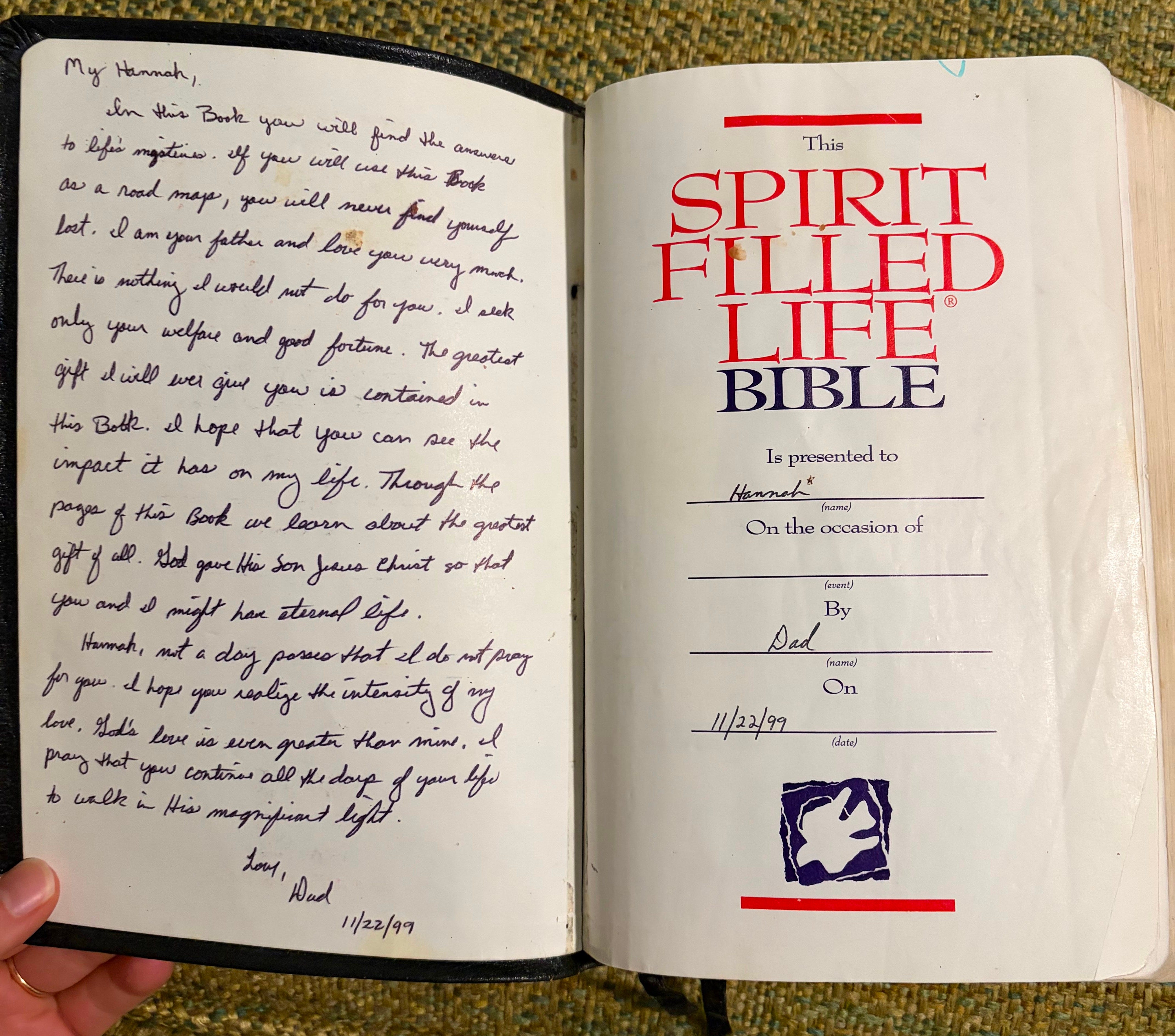
After my father died, I had a whole new set of questions as a young teenager: What does it mean when miracles don’t come, when fervent prayers aren’t answered the way we hope? How do we hold faith in an all-powerful, all-good God who doesn’t always act on our behalf in the ways we think he should? This led me to the Reformed tradition, to mentors who taught me about God’s sovereignty and his mysterious providence even in the hard things.
By the time I was in seminary, I cheekily referred to myself as a “Bapti-presby-costal” because each of these streams of Christianity had formed me deeply. Then, I discovered the sacraments. Part 1 of this discovery was becoming convinced that weekly Eucharist is a superb way to teach people about the God who has come near to be with us and dwell with us. Part 2 of this discovery was what happened in my own faith and my own life after I started receiving weekly Eucharist.
The Brass Tacks: Why I’m Still Here
It won’t surprise anyone who has read my book that the Eucharist is what brought me into the Anglican church. But once I got there, I realized how many other things I’d been missing all along. The Eucharist has helped me grow in my faith but so has the church calendar: If we are all story-shaped, what better story around which to organize our worship than the story of redemption? Every year we revisit the good news again, taking time to pause and reflect together on each part of it—Jesus’ birth and our desperate need for it, his ministry on earth, his death, resurrection and ascension, the gift of the Holy Spirit and our mission to the world, his ongoing presence with us, and our hope for Jesus’ return at the end of history. We never graduate from the gospel; we can only go deeper into it. The church’s liturgy is designed to help us do that.
The Anglican tradition also opened my eyes to a more global and ancient church than I’d known before. Sure, I knew there were Christians around the world from a young age. But I didn’t know that there were so many Christians in such active community around the world—that we share leaders (bishops) and traditions (liturgy) and even study the same Scriptures on the same Sundays (lectionary). I also knew that the church was born two thousand years ago. But growing up Protestant, my theological education functionally omitted most of the tradition between the New Testament and the Reformation— as if what happened between the second and sixteenth centuries of the church didn’t really count.
Becoming Anglican has not felt like a departure from my evangelical upbringing— it has felt like an expansion of it. The serious study of Scripture, the power of the Holy Spirit, the mysterious providence of God: all of these treasures are retained in the Anglican tradition. But so are two thousand years of church history, the real presence of Jesus in the Eucharist, and the support of the liturgy—centuries worth of prayers handed down to help us grow up into this ancient faith. (Spontaneous prayer also has a role in the life of faith, but liturgy helps us even with this—it’s like the chord structure of orthodoxy which then teaches us how to improvise well.)
Why Not Catholicism?
This is a question that often arises when Anglicans start gushing about liturgy and sacraments and church history. If those are the reasons we are drawn to this tradition, why not “keep going” all the way to the Catholic or Orthodox Church? I think it’s a fair question—though it’s one I never would have asked in my twenties. Like a good evangelical, I grew up with a lot of suspicion toward Christians whose faith I assumed was “compromised” by “unbiblical” teachings and traditions.
Now, I see things differently. I would not argue on principal against someone converting to Catholicism or Orthodoxy any more than I would argue against them joining any creedal, Trinitarian Church. I would ask: What’s driving you to this decision? Who have been your guides? What do you hope to find on the other side of conversion? If it’s a perfect church you’re looking for, you’ll be disappointed—but if you feel this is where Jesus is calling you, I sincerely believe you will find him there.
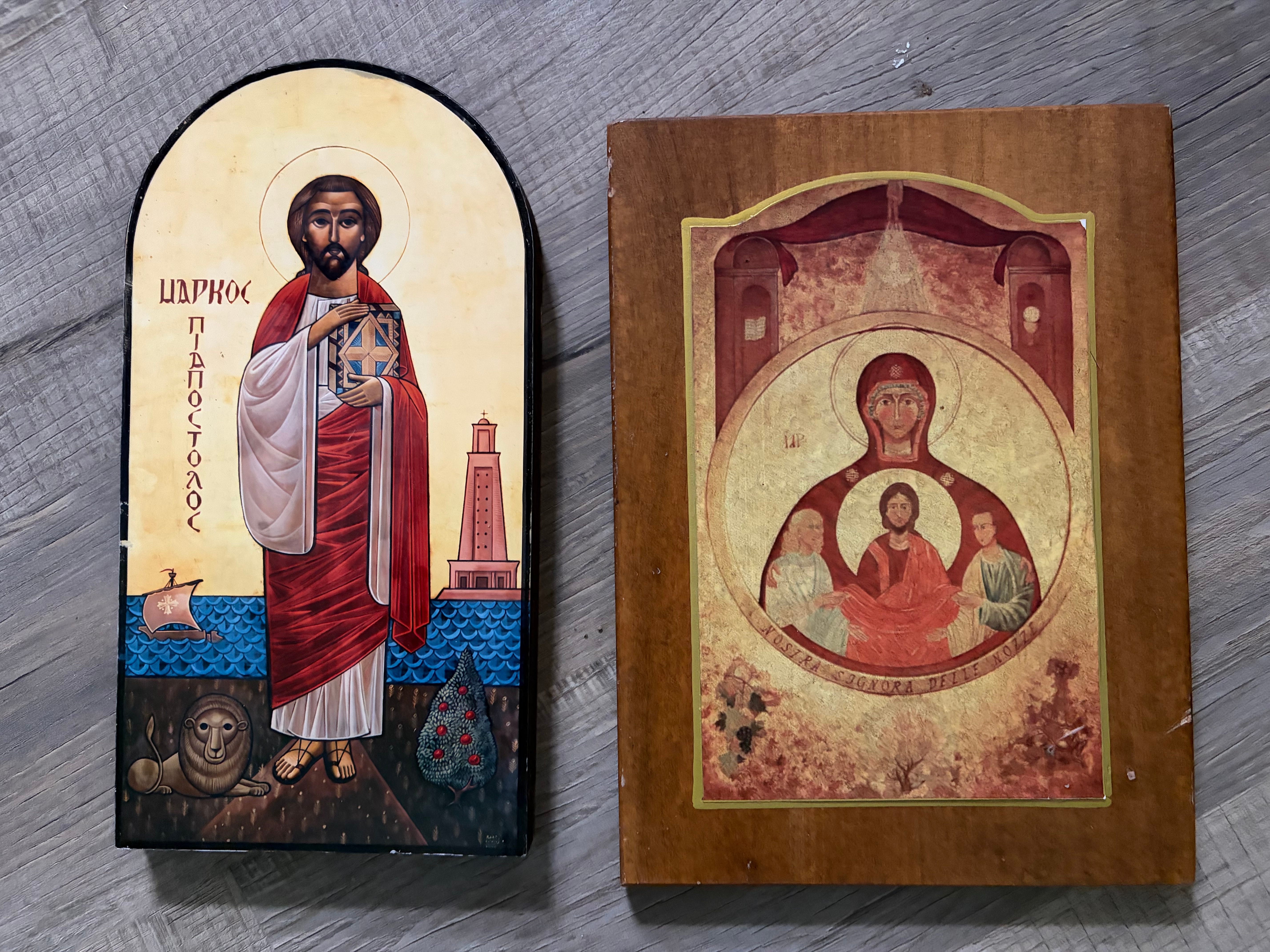
The reason I am not Catholic or Orthodox—at least as of this writing—is that I personally feel that the Anglican Church affords me the greatest unity with Christians on both sides of the Reformation. This theologian said it well in the context of liturgy, but I think it applies writ large: “Anglican [liturgy] is distinctive because it balances in a remarkable way continuity with the Church before the Reformation, with Reformation concerns and principles.”
Anglicans have problems. A whole lot of them. At times I feel weary or disillusioned by them all. But because I have been in ministry for a while now— and because I have friends in many other traditions— I know that everyone’s got problems. So I write about why I’m Anglican not to try and convince anyone, “Come over here and everything will be great!” but to hopefully convey, “Here are the gifts my church has to give.” I do think they’re pretty great. At the same time, I eagerly await the day we are all at one Table, sharing the gifts we’ve all received from our one Host. For now, I believe he has called me to this one.
Hannah+
PS- This piece is not even an attempt to exhaustively explain/expound any of the above. Books and books have been written on topics like liturgy, the Reformation, ecumenism, church history, etc. My goal was to introduce and illustrate some of the themes that have been most important in my own faith journey (and to stick to a reasonable word count). If you are interested in more resources, here are some that came to mind as I was writing:
-this podcast interview with Rev. Dr. Matthew S.C. Olver, an Episcopal priest and liturgical historian (other episodes of this podcast are great too)
-my book about how the Eucharist forms us as people of hope— which I pray will resonate with and enrich Christians of all traditions
-these accessible books about the church calendar, “rote” prayer, and other FAQs about the Anglican way
-the first public piece I ever wrote, about why I went ACNA and not TEC. There’s more that could be said than I say here, but I still agree with what’s written.
-this creepy but awesome podcast co-hosted by a Catholic exorcist and a Protestant entrepreneur (really— it’s weird and I love it).
Hannah, I think this along with your book, explains why a lot of us chose ACNA in our journeys.
Thank you so much for this. I feel so much the same.