
Why I'm A Priest
Or, 1,000 words on being a woman in vocational ministry

This is part 3 of a 3-part series on “Why I Believe.” See pt. 1, “Why I’m a Christian” and pt. 2, “Why I’m Anglican” here.
I first received a call to ministry at age eight.
I say “received” because I sensed some sort of draw (an impression? A desire?) to work for God and said yes in my spirit. I still remember gazing out the window of my childhood bedroom and daydreaming about the orphanage I would one day build in a far-off country and the hundreds of children who would live there (be merciful; I was eight!). This particular vision was likely an amalgamation of my love for kids and of the only model I had for women in ministry: Baptist missionaries who worked, often with children, overseas.

I might also have chalked up this vision to childhood dreams (like my subsequent interest in becoming a marine biologist, a world-famous singer, and a traveling painter), except it’s the one dream that never left me. When I entered college, I was still staunchly committed to a future in foreign missions and made a point of telling people about it.
What I discovered in college, however, is that mission work doesn’t only happen “overseas.” It can happen in a college classroom or a coffee shop or a local church. I’d grown up with a very narrow understanding of where God might call me and what kind of work he might give me to do—but in college he began to expand that. It took a number of years, plus a vision trip to another country, to realize that maybe God was calling me to ministry in the United States.
Suddenly, questions I’d been able to avoid as a future “overseas missionary” now rose to the fore. What exactly can women do in ministry in the US? I found it ironic that nobody asked these questions of women serving abroad. There was an unspoken “out of sight out of mind” (or maybe even “don’t ask, don’t tell”) policy about women serving overseas in my particular Christian subculture. But now that I was not in that category of women, I had to figure out what was appropriate to even consider before I could discern my vocational path forward.
This led to a multi-year study during seminary under the mentorship of conservative biblical scholars. Most of them belonged to denominations that did not ordain women, but some of them disagreed with their denominations. Suffice it to say, as a cradle Southern Baptist I was very concerned about going “off the rails” of biblical authority and truth, and I am grateful to have had such wise, godly guides on my journey.
Given that it took me years to work through the biblical and historical considerations about women in ministry, and that there are books and books to be read on this, I don’t expect to change anyone’s mind in 1,000 words. But I will recommend the work of Philip Payne, a fellow evangelical missionary type who spoke my language (and probably at least 5 other languages, including biblical Greek and Hebrew). His careful exegesis was the first to really get inside my head and help me think about certain biblical texts differently.


I will also say that my study among conservative scholars, many of whom were willing to say, “I don’t know for sure” or, “This is complicated” gave me a deep respect for various conclusions about the exact role of women in ministry, and it drew me to the Anglican Church in North America which allows for differing convictions regarding women’s ordination. (I wrote more about that here.)
Eventually, I personally came to believe that God created men and women to serve side-by-side in the church and the world. In the Garden, God gave Adam and Eve a shared calling. Meaning, “priestly” ministry is not a gendered thing, but a human thing. After a decade of ministry, I remain convinced that shared leadership between men and women is not only biblically faithful, but also relationally healthy: men and women are going to bring different insights, experiences, embodiments, and perspectives to the work of ministry. Just as children benefit from having both a mother and a father, the church benefits from having both male and female shepherds.
I will admit that even after changing my mind about what God might call certain women to do in the church, I was afraid to presume that he might be calling me to do those things (namely, things that might offend others—preach or lead, for example). This fear was partially godly, I think: nobody, male or female, should presume anything of God. In my experience, women who’ve discerned a call to ministry interrogate their own presumption far more thoroughly than most men, because men are rarely called “presumptuous” for exploring a call to leadership. Women often are.
But my fear was also partially cowardice. I didn’t want to upset people or become a target. For a while I tried to talk myself into pursuing the deaconate because that would be less controversial in my particular denomination. What ultimately made the difference was an honest exploration of my gifts and sense of call: What do I believe God has given me to do? In my tradition, priests are people who serve up Word and Sacrament to the church. Having been a word-person from childhood, and having asked in every church I’d belonged to since college, “Can I help serve the Communion bread?” I knew I had to at least formally ask the question about priestly orders.
Four years later, I was on the cusp of priestly ordination and again wondered if I should just stay a deacon. I confided in my bishop about this. He looked me in the eyes and said, “I do not see that for you. I want you to embrace what God has given you even if it will be at times uncomfortable.” I share this story to illustrate the fact that if it were not for the encouragement of other leaders—mostly men—to take some brave steps, I don’t know much harder or longer my journey to ordination would have been.
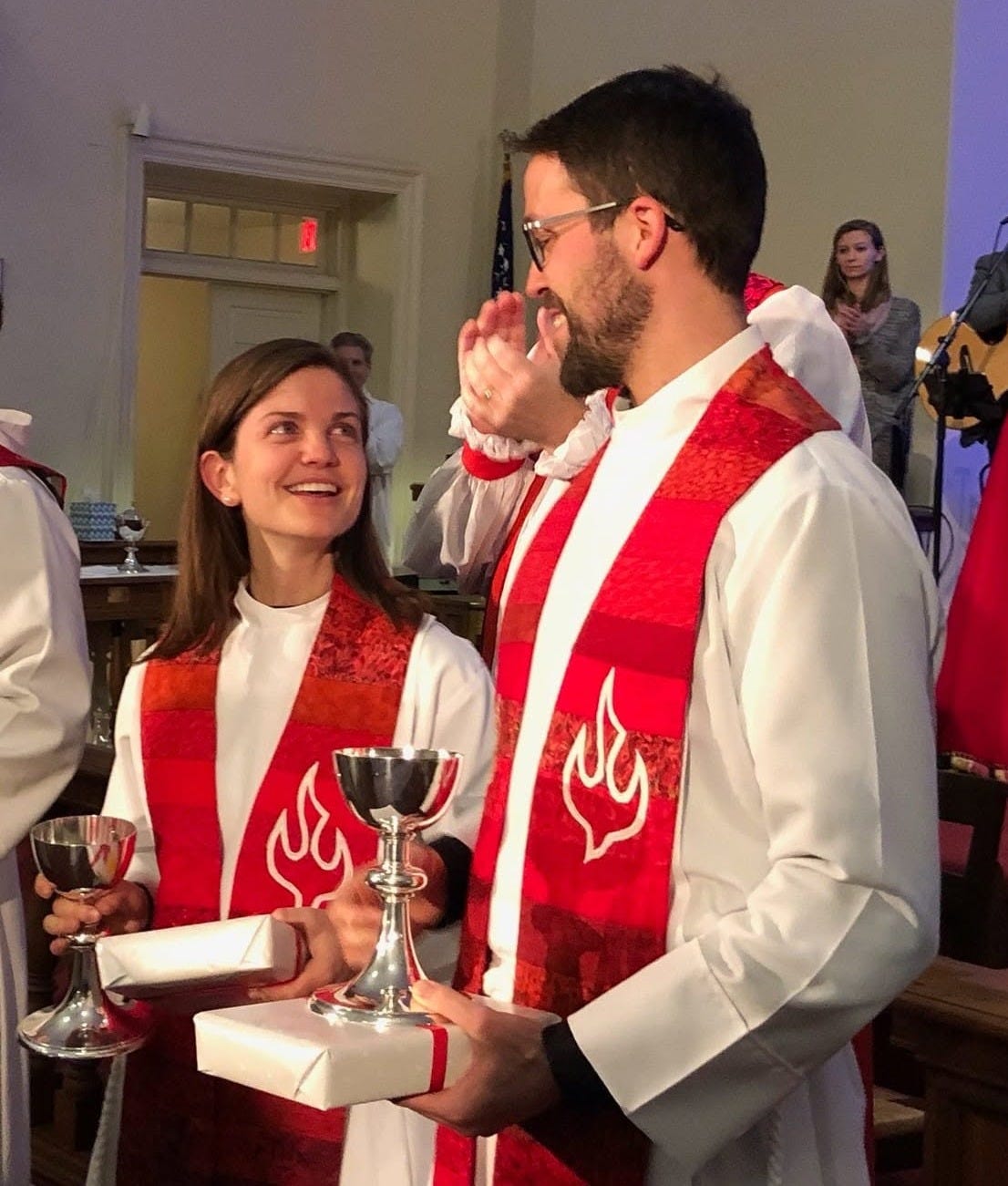
If you are reading this and are in a position to notice and encourage the gifts of women around you, inviting them to teach or preach or lead a ministry or consider ordination, you probably can’t imagine how significant that might be in their story. And even if you don’t believe women should do certain things in the church: if you are in a position to encourage greater contributions from women in whatever ways your tradition does embrace, you probably can’t imagine how much that will benefit the whole body. The church is healthiest when men and women are both engaged in the work God has given us to do.
PS- I wrote recently on Instagram that lay (un-ordained) ministry is equally ministry, and that being gifted and called doesn’t mean a person needs to have a title or stand behind a pulpit. However, since New Testament times, it is clear that certain persons are called to a certain kind of ministry, namely, to regularly teach and shepherd the flock. Those persons were appointed and recognized for their unique role in the body. God calls all of his people to ministry. Some are called to lifelong or particular roles within ministry. To what has he called you? Are you open to an answer that might surprise you?
Hannah+
PPS- If you’re curious…
On the topic of women in leadership: In addition to Philip Payne, I was also influenced by N.T Wright who is often considered one of the foremost living New Testament scholars. He has spoken to this issue here and here, among other places.
On the topic of ordination: these two books are helpful companions for those discerning the deaconate and the priesthood in the Anglican tradition. If you have a go-to resource for a different denomination or tradition, I’d love to see it in the comments!
On the topic of Word and Sacrament: When I was ordained in 2018, I had no idea that I would eventually write a book about the eucharist. But, Communion really has so profoundly shaped my faith that I recently wrote 50,000 words about it. It’s a narrative theology of the eucharist, and how this meal can give us a taste of Christian hope amid really tragic life experiences. I would love for you to read it!

I am so thankful that women are a major part of ordained ministry in the Anglican Communion. Through the generations, countless women were called to ministry, but they weren’t allowed to pursue their religious passion. While it’s true many served in spiritual convent communities, making positive impact in their locations of service. But they weren’t ordained to accomplish their true calling.
Thanks for your continued posts.
Peace!
So many bits of your story parallel my own (except I actually was a missionary overseas for 15 years before rethinking what ministry God was calling me to!)! Thank you for sharing. We are *just about ready* to reopen my discernment and this is a well timed reflection for me as I consider taking that step.