
Weird and Good
On living with redemption and launching a book during Lent

For the last few months, I’ve been reading the book of Ezekiel.
It is weird.
Old Testament weird—ancient, confusing, fantastical, challenging, exciting.
Lots of it I don’t quite understand. If I’m honest, reading it has reminded me of faith: we plod along, day after day, in a story that is often mysterious to us.
At times we find refreshment and resonance: “I myself will be the shepherd of the sheep cause them to lie down in peace” (Ez. 34:15). But other times, it’s all Greek (or, in this case, Hebrew): “Wherever the spirit would go, they would go, and the wheels would rise along with them, because the spirit of the living creatures was in the wheels” (Ez. 1:20).
Having learned a bit of actual Greek and Hebrew, I can speak to the value of digging into the mystery. There’s a lot we can glean if we give ourselves to the study of God’s Word and his work in our lives. But there’s also a lot we’ll never fully grasp. There are seasons that don’t make sense or that suspend our belief.
Despite how much I hate this, our lack of understanding isn’t a flaw but a feature of faith: our faith holds us even when we can’t hold it. Because ultimately, we aren’t the storytellers. We are the storied; we are the ones being carried along in a narrative much, much bigger than we think. Much bigger than we can even appreciate. One day, we’re told, we’ll know fully—but even then, I don’t think we’ll know all things. We’ll know him, and that will be enough.
--
I’ve been reflecting lately on the weirdness of having lived through a hard childhood and to now be sharing it with strangers publicly in a book. It’s very rewarding, of course, to see how God has put it to use—nothing is wasted if we offer it back to him. And yet, that doesn’t explain why it happened in the first place. Redemption of a thing doesn’t justify the original scandal.
As much as I like analysis and crave closure, I think conclusive explanations often cheapen reality. Confident faith looks less like having simple answers to all questions and more like being able to embrace paradoxical truths: God-and-man, sinner-and-saint, already-and-not-yet. In my life, this looks like embracing both lament and gratitude. I grieve what happened to my family, but I am grateful for how God has met me in it and how he has worked through it. The finer points really belong to him, not me.
Launching this book at the start of Lent has invited more reflection on this: even the parts of my story that I have processed well enough to articulate in 50,000 words, even the things I’m ready to shout from the rooftops, are subsumed in a larger story that I’ll never stop exploring. I say my bit, then I quiet down and listen. I receive ashes. I remember that I am not the lead character. It is quite freeing.
The story of redemption is weird. And so, so good. We’ll never get to the bottom of it.
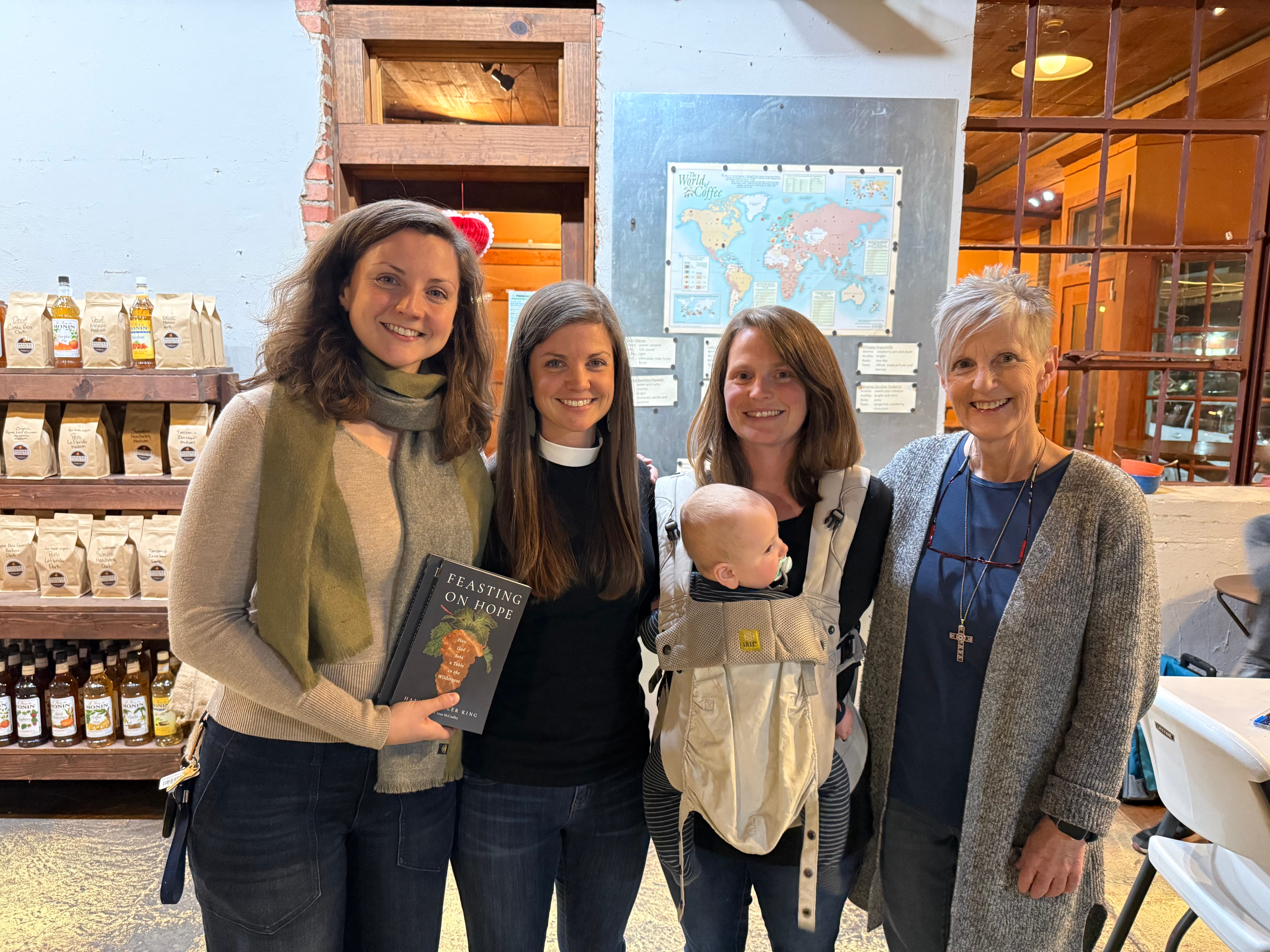
My book is one week old today. I have so many people to thank for helping me send it into the world. If you pre-ordered, recommended to a friend, or wrote an Amazon review, thank you!! A highlight of last week for me was having my mom and two sisters drive from out of state to celebrate our Fat Tuesday/book launch party in North Carolina where I live. I loved sharing its message with my local church and their friends.
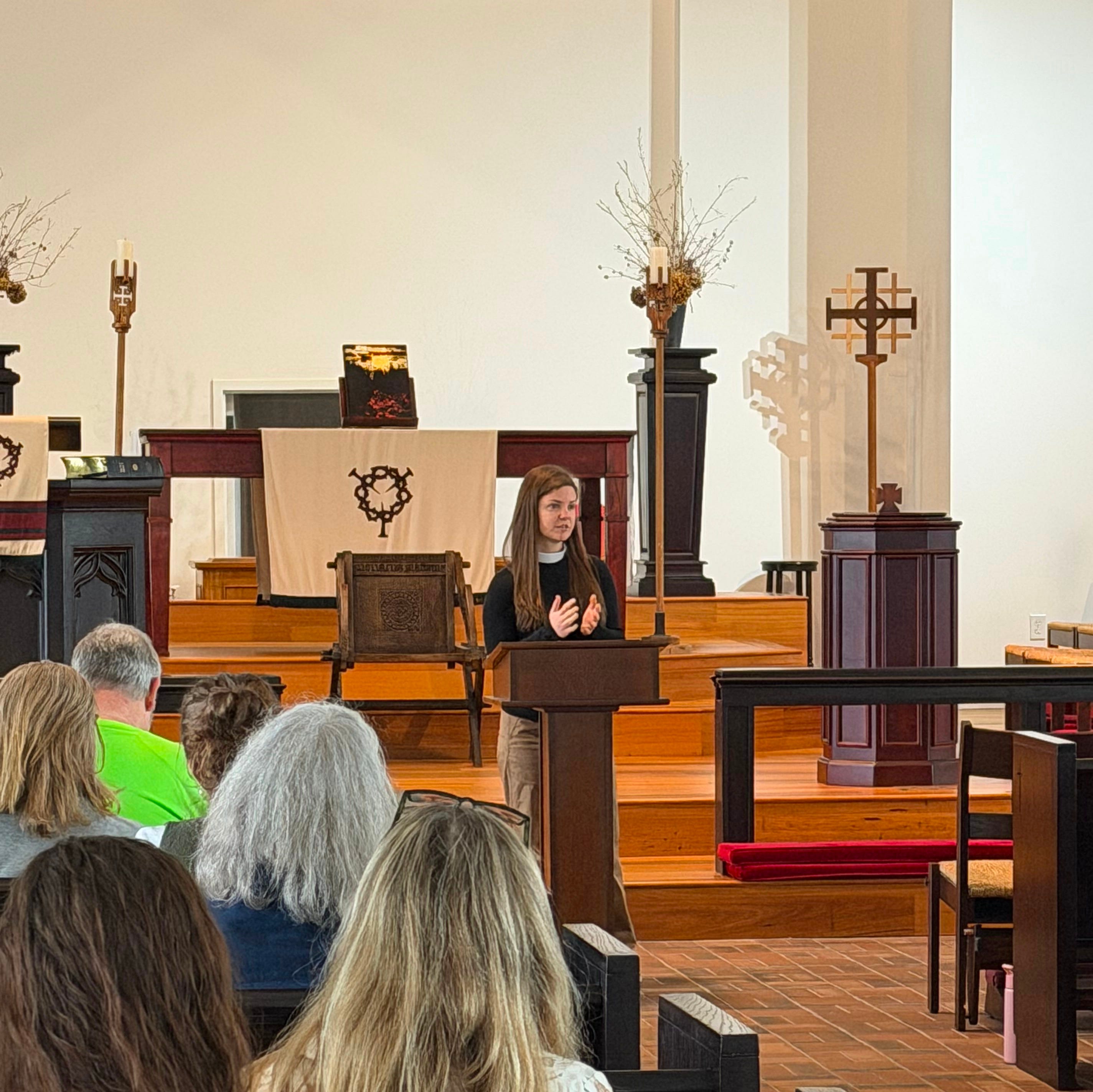
Another highlight was speaking at a church in Columbia, SC about how “hope in the wilderness” relates to Lent. Next month I go to Dallas, TX and Rome, GA. If you are in one of those areas, or if you are interested in hosting a conversation about Christian hope where you live this summer or fall, let me know!
Hannah+
PS- If you’re curious…
Here are a few podcast conversations I’ve had about the book with friends Esau McCaulley, Courtney Ellis, Meg Cranshaw and Kat Silverglate.
Here’s what I learned about Jesus’ temptation in the wilderness and what it can teach us about how to live (starts at around the 30 minute-mark)
Here are some book excerpts: from one about church hurt at Christianity Today and here’s one from one about joy at Mere Orthodoxy . But shoot, if you’re going to read the excerpts you might as well just read the book!
So many good thoughts. Well said.
"Confident faith looks less like having simple answers to all questions and more like being able to embrace paradoxical truths: God-and-man, sinner-and-saint, already-and-not-yet. In my life, this looks like embracing both lament and gratitude. I grieve what happened to my family, but I am grateful for how God has met me in it and how he has worked through it. The finer points really belong to him, not me." Such a good scaffolding word of truth, Hannah.