
On Getting Caught in a Riptide
My literal-- and metaphorical-- experience with crisis this summer.

It had rained all afternoon.
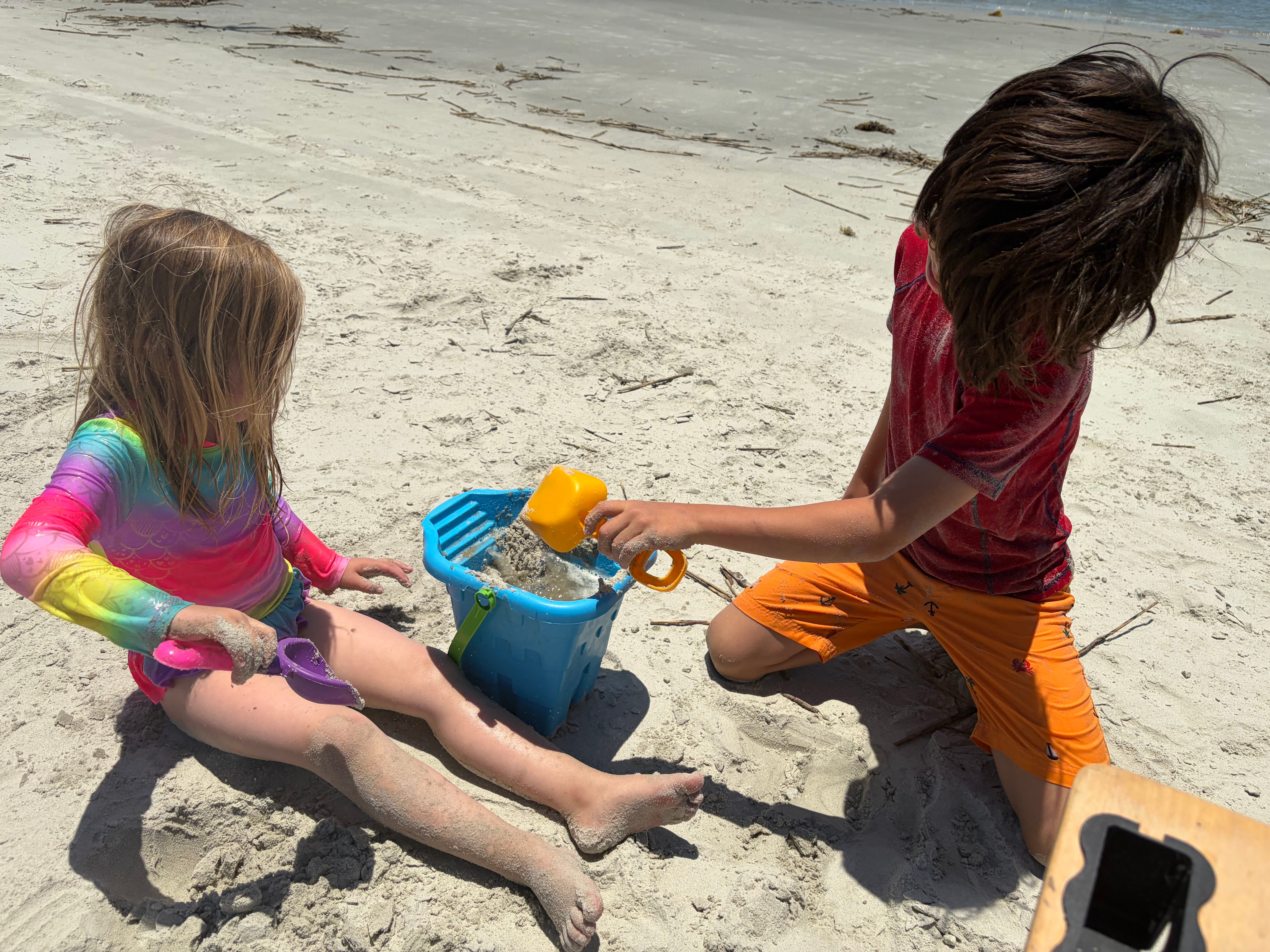
On our first full day at the beach, my eight- and ten-year-old boys were desperate to get outside. When the rain finally subsided, we headed straight for the ocean. I did briefly wonder, Will all that rain make the waves more intense? But their enthusiasm prevailed over my thoughts. I gave them instructions: Stay together, don’t go out beyond waist deep, and make sure to stay in front of me. Then I turned my beach chair sideways so I could see them on one side of me and my four-year-old daughter in the sand on the other side.
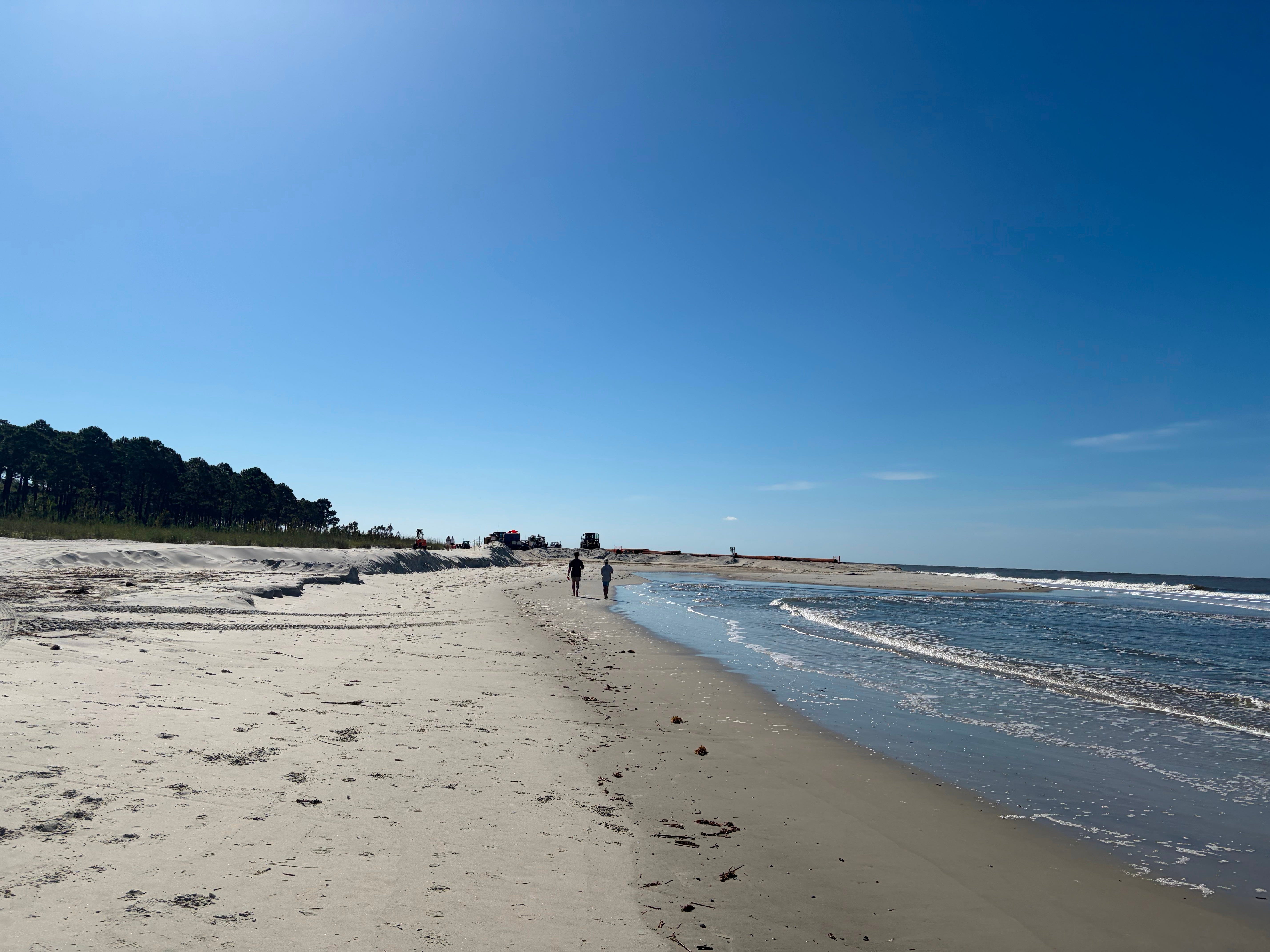
My husband Michael joined us a few minutes later. It was low tide, so there was a huge expanse of beach between our daughter on the sand bar and our boys in the waves. My head toggled back and forth between them as Michael read out loud from a book. At one point I said, “Hold on. The boys look like they’ve gotten kind of far.” We walked to the water’s edge and heard my firstborn scream, “Help!” Then we sprinted into the waves.
My maternal intuition had already been raised, I think. Between the rain and the tide and the size of the waves I was on higher alert than normal. (I also was so frantic in my effort to get to my sons that I face planted in the waves at the start of our big swim, which my ten-year-old described as a moment of hilarity amid his distress.)
When we got out to them, they explained that a big wave pulled them out and they couldn’t touch the ground. Neither could I or my six-foot-tall husband. Still, we thought it would be simple enough to put them on our backs and paddle to shallower water. Thanks to an incredible surge of adrenaline, I managed to keep my ten-year-old on my shoulders while swimming against the waves—but we weren’t making much progress toward shore.[1] My husband and younger son were having a much worse experience. As he’d begun to panic, my eight-year-old kept grabbing Michael by the throat and trying to climb on top of his head. Before long, Michael had lost so much oxygen that he couldn’t hold on to our son any longer. For a moment, I had both boys in my care in the deep choppy water while my husband struggled to recover.
As powerful as I felt in that moment, I knew I did not have the strength to swim my sons back to shore—especially not with the panic that was setting in for them. We were still too far out and the water had us in a holding pattern I couldn’t figure out how to escape. By some miracle, a trick from my childhood came to mind and I told the boys to float on their backs. (My younger son kept insisting he couldn’t, so I had to put him in the position myself and prop him up from below). Michael later reported that hearing this instruction probably saved his own life: he’d spent all his energy trying to keep our son above water and had no power left in his limbs. He didn’t think to float until he heard my voice. After we bobbed for a few minutes, a courageous stranger swam out to us with a boogie board and helped my sons get to safety, one after the other.


--------
I have already told this story a handful of times, in part to process the terror of it for myself and in part to raise awareness about water safety with other beachgoers. But I haven’t yet written about the internal struggle it has crystallized for me: when I sense danger, how do I know when to swim like hell and when to relax and float?
In crisis, I tend to be a “doer.” When Michael and I were nearing the end of seminary and needed jobs, I cold-called dozens of churches looking for potential openings. (Bravery that borders on annoying has always been a quality of mine.) In general, my approach to this process was intense and a little frenetic. Michael, more relaxed and peaceful about the future, joined in much later. The day he started looking, a job had been posted at a church near Washington, D.C. An hour later, Michael was on the phone with the pastor who ended up hiring us. Despite all my advance planning, I can’t take any credit for finding our eventual workplace.
Job hunting after grad school may not seem like much of a crisis. But I’ve gravitated toward over-functioning in heavier situations too. When my mom was diagnosed with cancer around the same time, I obsessively researched cancer diets and nutrition. Then I spent the better part of a year cooking things for her that admittedly didn’t taste very good— because I was determined to do my part to fight her cancer.
In general, I like my energy and task-orientation. But I also know that these attributes have been animated by a deep fear of loss, a tragic anger toward the powerlessness of my childhood. When my dad was sick, I had no agency. When he died and the bank foreclosed on our home, I didn’t get a vote. Years later as a young mother, when a series of other tragic losses impacted my family resulting in subsequent moves to new homes, my childhood trauma got its own kind of adrenaline rush, and I developed a white-knuckle reaction to all of life. You could say that as an adult, I’m overcompensating for the powerlessness I hated as a child. Now, I spend a lot of my time scanning the horizon for potential crises, hypervigilant and ill at ease. In certain ways, I am a control freak.
Of course, sometimes real crises are out there. This fact only fuels my fire. If I hadn’t been paying close attention to my boys on the beach, if I’d relaxed and closed my eyes for five minutes, it might have been too late. But also, in the end, it wasn’t muscular action that kept us afloat, but a surrender to the water to hold us; it wasn’t my skill that got us to shore but the stranger who helped us. How do I learn to hold these realities together? Truthfully, I’d rather not. Though I was relieved that we made it out of the ocean, I hated myself for letting it get that close.
As I laid awake in bed all night after our scary swim, watching YouTube videos about rip currents, my brain was desperately searching for the information I thought would help me respond better next time, or perhaps that would have prevented it in the first place. Maybe if I’d been more prepared, more vigilant, less stupid and trusting, this would never have happened. It felt more responsible to wallow in shame than to sit in gratitude for God’s mercy, more acceptable than accepting my weakness. I do not want to be in a position to need to float and wait. I do not want to get stuck in any current, damn-it.
And yet, as I now know from experience, the ocean is much bigger than my plans for it. I may think I can control my life through careful planning and strategic action, but that is like thinking I can control the tide. And I may think I can white-knuckle my way out of a crisis, but that is like trying to swim against a rip current. Over-functioning may make me feel more powerful in the moment, but long term it’s a recipe for burnout and exhaustion.
In this particular season of my life, certain real threats loom on the horizon. I know my call right now isn’t to close my eyes and wait. But I also know my call isn’t to grab everyone by the throat and try to resolve the threats myself. Instead, the call is to learn dependence: the kind that sometimes sprints in obedience and sometimes floats— it’s to practice the kind of trust that can take action but also be patient, that can powerfully participate but also confidently surrender. This is the most uncomfortable path forward because it requires me to stay alive to the problems without trying to control them.
I heard recently in this interview that authors often think they’re writing a book for others when really, they’re writing a message to themselves. In Feasting On Hope, I write about some of the above struggles in past-tense, which might imply that I’ve moved on from them. I have not. But I am finding in the pages of my own book a reminder that my past isn’t only full of ghosts and nightmares. It is also full of grace upon grace. It tells of a good God who was with me as a frightened child and who did hold me, both when I was flailing and floating. Who was actually there even when I couldn’t see him, just like he was for my panicked son who kept asking after being put on the boogie board, “Am I still on the board? Is it still there?”
I’ll never forget reassuring my son over and over as I swam beside him to shore. And as I ask my own, slightly more sophisticated adult version of the same question, I know God does not tire of reassuring me. Lord, I believe, help my unbelief.
PS- If you’re curious…
Tangentially related: in June I wrote about the role of anger in Christian piety for Christianity Today
One of my favorite podcasters interviewed me about Christian hope, being a female priest, church unity and what those things all have to do with the eucharist here.
I gave a shout out to the stranger who saved us in this sermon about how Christian mission takes many forms.
[1] I still don’t know for sure whether we were caught in a rip current, but since this ordeal I’ve done a lot of reading and watching about how ocean currents can trap swimmers. I want everyone to know something about them!
Hannah you are such a good writer and teller of stories and truth. Thank you! My favorite line was this.....Bravery that borders on annoying has always been a quality of mine....because I relate so much ;)
“The call is to learn dependence: the kind that sometimes sprints in obedience and sometimes floats— it’s to practice the kind of trust that can take action but also be patient, that can powerfully participate but also confidently surrender.” — yes and amen ❤️